Monday to Friday

9:00am - 6:00pm

IFAT India 2025: India’s leading trade fair for Water, Sewage, Solid Waste, Recycling & Bioenergy (12th edition)

Dates: October 14–16, 2025
Venue: Bombay Exhibition Centre (BEC), Mumbai — Halls 1, 2 & 6 IFAT INDIAJETRO

Future of electric excavator loader 5

Description
IFAT India returns for its 12th year as the country’s most influential platform for environmental technologies—bringing together global innovators in water, wastewater, solid waste, recycling, air, and the fast-growing bioenergy ecosystem. Expect a high-calibre exhibition, a thought-leadership conference, a dedicated Bioenergy Pavilion, and curated buyer-seller networking to accelerate real projects and partnerships across India’s green economy. IFAT INDIA+1


Key announcement

🌱 Alliance for Bioenergy Ecosystem @ IFAT India 2025

A powerful collaboration between German RETech Partnership, GIZ, Mission Samarth, Indian Federation of Green Energy (IFGE), and EAC Consulting—uniting stakeholders from biofuels, biomass, and biogas to fast-track India’s clean energy transition.

What this enables onsite

Grab future 2
  • Dedicated Biomass Panel curated with Mission Samarth
  • Bioenergy Pavilion—latest sustainable bioenergy tech & solutions
  • Exclusive Buyer–Seller Forum with pre-fixed 1-to-1 meetings
  • Thought-Leadership Program—panels, presentations, and interactive sessions on innovation, policy & financing
  • Business Outcomes—matchmaking to convert conversations into PO-ready opportunities

2025 show overview

  • New hall plan (Halls 1, 2, 6):
    • Hall 1 – Water supply & sewerage systems, filtration & smart water, pumps & flow control, instrumentation & labs, air pollution & noise control, environmental services
    • Hall 2 – Solid Waste, Recycling, C&D Waste, Waste-to-Energy, Bioresources, City Cleaning; includes Bioenergy Zone and Orange Stage knowledge forum
    • Hall 6 – Water & sewage treatment, sludge management, hydraulic engineering, ZLD, desalination; includes Speaker’s Corner
  • Where to register (official):

Greener earth 4

Space & pricing (exhibitors)

Regular price (Apr 1–Aug 31, 2025)

TierBare Space (₹/sqm)Shell Space (₹/sqm)
Platinum16,50018,000
Gold15,70017,200
Silver14,90016,400

Surge price (Sep 1–Oct 10, 2025)

TierBare Space (₹/sqm)Shell Space (₹/sqm)
Platinum18,20019,700
Gold17,30018,800
Silver16,40017,900

Important commercial notes

Greener earth 3 1
  • Co-exhibitor fee: ₹17,500 + taxes
  • Minimums: Shell 12 sqm, Bare 24 sqm
  • Preferred sizes: Platinum 36 sqm, Gold 24 sqm, Silver 12 sqm
  • Special booth types: Corner (≥18 sqm), Peninsula (≥36 sqm), Island (≥60 sqm)
  • Height limits: Bare 4.0 m, Shell 2.5 m (Hall-specific common-wall limits apply)
  • Power: Additional power recommended for demos; test on zero day
  • Payment: 40% non-refundable down payment due within 21 days of proforma; 2% incentive on participation fees (ex-GST) for 100% advance within 7 days
  • Cancellation (from mmiconnect approval date): >8 weeks: 40% | ≤8 weeks: 60% | ≤4 weeks: 100%

Hall notes & rules (indicative layouts):

  • Hall 2 common wall height 2.5 m; floor loading: 10 t/sqm; cargo gate 5 m (W) × 9 m (H); onsite wood fabrication prohibited (prefab only).
  • Hall 6 floor loading and speaker’s corner as mapped; onsite wood fabrication prohibited (prefab only).

Quality pellet 1

2024 performance at a glance (benchmark)

  • 17,184 visitors from 25+ countries
  • 488 exhibitors; 6 international pavilions (Germany, Switzerland, Canada, Norway, South Korea, Netherlands)
  • 4-day conference with 300+ expert speakers across 40+ sessions
  • Buyer–Seller meetings, Start-up Pavilion, ULB & innovation zones
    These are the latest official tallies published by IFAT India. IFAT INDIA+1

Exhibitor landscape 2025 (rolling):
Download the as-on Aug 18, 2025 exhibitor list PDF to scan who’s already in.


How to participate (exhibitors)

  1. Apply online via MMI Connect (create profile → choose show → submit application). Approval confirms admission & access to exhibitor services. Messe München GmbH
  2. Email your preferred booth locations (share three options, bookings are global & first-come-first-served).
  3. Plan for hall rules: prefab builds, height limits, and logistics windows (see hall PDFs below).

सस्ती और टिकाऊ ऊर्जा का स्रोत 3

Buyer–Seller & meetings

  • Exclusive Buyer–Seller Forum with pre-fixed 1-to-1 meetings to turn interest into purchase orders.
  • Conference spans policy, innovation, finance, and implementation—strong focus on bioenergy tracks in 2025.

Tip for Bioenergy companies (biomass, biogas, WtE): Locate yourself near the Bioenergy Zone and Orange Stage in Hall 2 to maximize qualified footfall from content-led traffic; book early to secure aisles/corners facing the forum.


Practical info & sites (official)

  • IFAT India (official site): event overview, visitor registration, exhibitor information. IFAT INDIA
  • IFAT worldwide network: global IFAT calendar & context. IFAT Munich
  • BEC/NESCO venue details: hall information & address context. nesco.inExpoFP
  • MMI Connect (applications & services): organizer’s unified portal for applications & exhibitor services. Messe München GmbHmmiconnect.in
  • IFAT India 2024 review & numbers: official recap and KPIs. IFAT INDIA+1

Previous edition overview (YouTube): https://www.youtube.com/watch?v=wkMsWz1JKi4&t=3s


हरित ऊर्जा स्वच्छ भारत 4

Hall allocations (2025)

  • Hall 1: Water supply & sewerage, filtration & membranes, smart water, pumps & systems, flow control, metering & labs, air/noise, environmental services.
  • Hall 2: Solid waste & recycling, C&D waste, Waste-to-Energy, Bioresources, City Cleaning, Bioenergy Zone, Orange Stage.
  • Hall 6: Water & sewage treatment, sludge management, hydraulic engineering, ZLD, desalination; Speaker’s Corner.

Downloads (floorplans & lists)


Contact (organizer)

Abhimanyu Gupta
Manager – Business & Alliance, Messe Muenchen India Pvt. Ltd.
M: +91 99998 51286 | E: [email protected]


Key points summary (for quick copy)

  • Dates/Venue: Oct 14–16, 2025 | BEC Mumbai (Halls 1, 2, 6) IFAT INDIA
  • New in 2025: Alliance for Bioenergy Ecosystem; Bioenergy Pavilion; buyer–seller 1-to-1s
  • 2024 baseline: 17,184 visitors, 488 exhibitors, 6 country pavilions, 300+ speakers IFAT INDIA+1
  • Book now: First-come-first-served via MMI Connect (40% down within 21 days; early full-advance incentive) Messe München GmbH
  • Hall maps & exhibitor list: PDFs above (live planning reference)

Disclaimer

All information is compiled for convenience from official and organizer-shared materials. Layouts are indicative and may change. Prices are exclusive of taxes. Please refer to the official portals for the latest updates, deadlines, and terms.



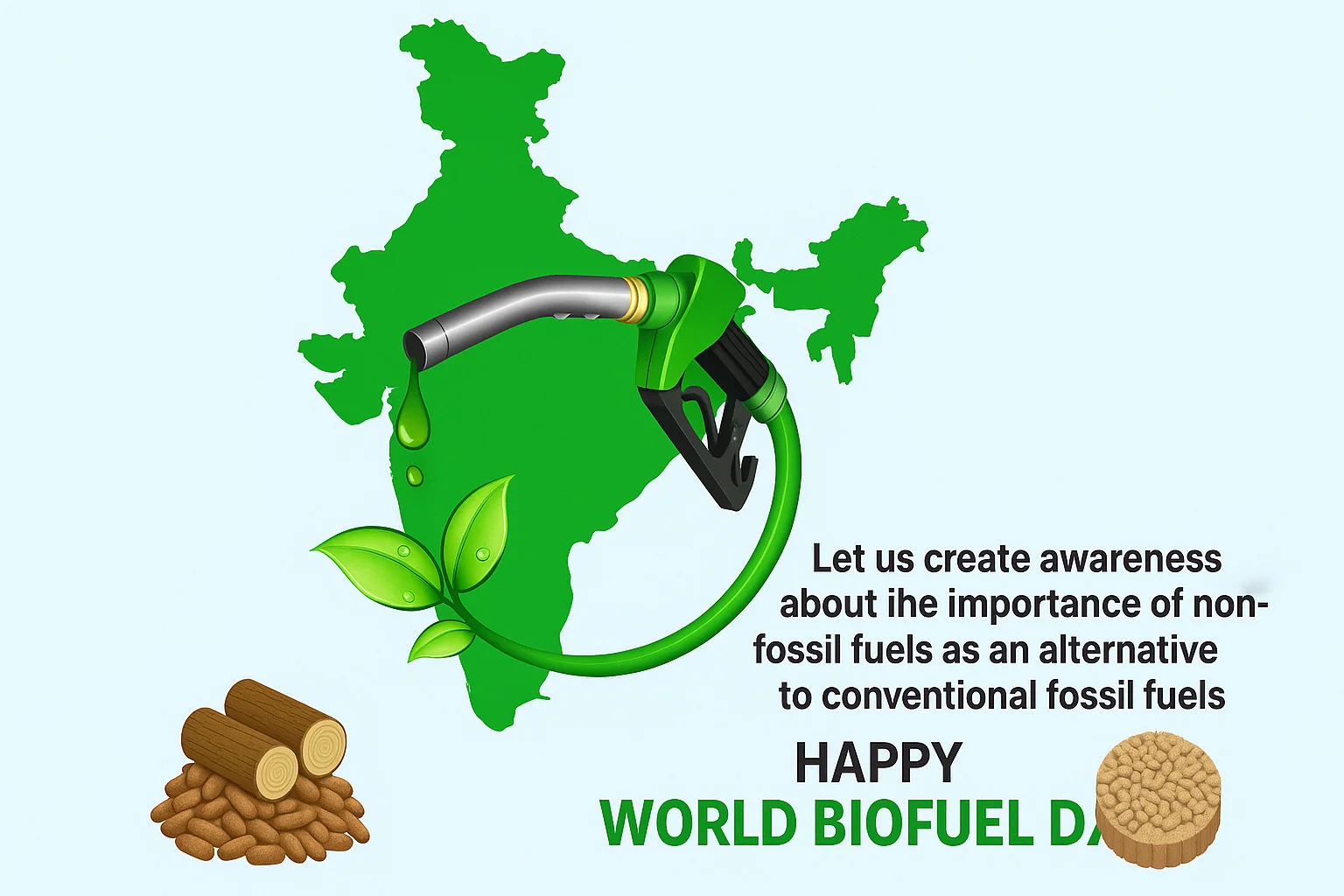
World Biofuel Day 2025: How Bharat is Leading the Green Energy Revolution in Biofuels

Current Progress in Bharat’s Biofuel Sector

Dual banner loader excavator3
  • Ethanol blending: As of January 2025, India achieved an ethanol blending rate of 19.6 %, very nearly meeting its 20 % (E20) target—five years ahead of schedule. The blending percentage surged from 1.53 % in 2014 to 15 % in 2024.
  • Compressed Biogas (CBG) Innovations: A ₹100 crore CBG plant is being set up in Bilaspur to process 150 tonnes of municipal solid waste per day, yielding 5–10 tonnes of CBG, while promoting waste-to‑energy, organic farming through fertilizers, job creation (~30,000/year), and GST revenues. In Punjab, plans are underway to manage paddy‑straw via CBG, though local resistance due to environmental and social concerns persists.
  • State‑Level Push in Bihar: Bihar is ramping up biofuel production via jatropha cultivation and ethanol-based solutions. It currently produces 5.65 billion litres of ethanol across 12 plants, exporting 60 % to southern India, and plans to launch 9 more ethanol factories by 2026. A new “Biofuels Production Promotion (Amendment) Policy, 2025” encourages both ethanol and CBG generation from agricultural and animal waste.
  • Sustainable Aviation Fuel (SAF): Indian Oil’s Panipat refinery has become the first in India certified to produce SAF, by converting used cooking oil into a co‑processed aviation fuel alternative.
  • International Collaborations & R&D: Karnataka’s 2025–26 biofuel policy includes MoUs with German universities, a new biogas plant, and biofuel‑powered vehicles at its research centre, with fiscal incentives and infrastructure support. Research on “advanced biofuels” encompasses microalgae, sweet sorghum, lignin valorization, and biomass-to‑methanol or jet/ marine fuels. 
  • India’s Place in the Global Bioenergy Market: India is projected to become the fastest-growing bioenergy market worldwide between 2023–2030. Targets include 20 % ethanol blending by 2025/26, 5 % biodiesel by 2030, 5 % CBG by 2028/29, 7 % biomass co‑firing in coal plants by 2026, and 2 % biojet blending by 2028.
  • Bioeconomy’s Economic Growth: India’s bioeconomy expanded from ₹1,000 crore in 2014 to ₹15,100 crore in 2023, with projections of ₹30,000 crore by 2030, driven by industrial biotechnology developments in biofuels, biomass, and biogas.

The Road Ahead: Future of Biofuels in India

  • Next‑Gen Technologies: Emphasis is growing on second‑generation (2G) biofuels from non‑food biomass such as lignocellulosic material, agricultural residues, and algae. These offer strong greenhouse gas reductions (60–90 %) compared to fossil fuels. Prominent players like IOCL, HPCL, and BPCL are engaged in building 2G biorefineries.
  • Algae‑based Biofuels: Innovations in photobioreactor design, genetic engineering, and cultivation are bringing algae into focus as a high-potential, CO₂‑capturing biofuel feedstock.
  • Certification & Market Instruments: For programs like mandatory CBG blending, India still needs to set up enabling mechanisms like certificate trading markets, akin to those used for biogas.
  • Global Alignment: India is a founding member of the Global Biofuels Alliance, launched in 2023 at the G20 Summit, which advocates for sustainable biofuel standards and global cooperation.

Climate Impact & Sustainability

Greenhouse Gas Reduction

  • Emission cut: Biofuels help curb GHG emissions by replacing fossil fuels. Ethanol and CBG significantly reduce particulate emissions (e.g., PM2.5), aiding air-quality improvements.
  • Advanced biofuels: Second-generation and algae-based fuels can slash GHG emissions by up to 90 % compared to conventional fuels. 

Sustainability Challenges

  • Land use & food security: First-gen biofuels can compete with food crops and contribute to deforestation if grown on arable land; hence, shifting to non-food feedstocks is critical.
  • Biodiversity & soil health: Monoculture cultivation for biofuels can harm ecosystems, reduce soil nutrients, and threaten biodiversity.

India is clearly moving toward more sustainable, advanced, and diversified biofuel strategies—balancing economic growth, rural development, and climate action.


Recommended Blog Structure

  1. Introduction — Significance of World Biofuel Day; India’s commitment.
  2. Current Status — Ethanol blending, CBG, SAF, state initiatives, policy progress.
  3. Technological Advances & Future Trends — 2G fuels, algae, SAF, certification mechanisms.
  4. Climate & Environmental Impact — Emission benefits, sustainability concerns.
  5. Call to Action — What more needs to be done, and how readers can engage.

Source Websites & for More Details you can visit:

  • Next IAS – nextias.com
  • Vision IAS – visionias.in
  • Press Information Bureau (PIB) – pib.gov.in
  • Times of India – timesofindia.indiatimes.com
  • Advance Biofuel – advancebiofuel.in
  • Department of Biotechnology, India – dbtindia.gov.in
  • International Energy Agency (IEA) – iea.org
  • Praj Industries – praj.net
  • USDA Foreign Agricultural Service – apps.fas.usda.gov
  • Wikipedia – en.wikipedia.org

Disclaimer:
The information presented in this article is compiled from multiple credible sources, including government publications, reputed news portals, industry reports, and publicly available research. While every effort has been made to ensure accuracy and reliability, the data and projections may change over time due to policy updates, technological advancements, and market dynamics. Readers are encouraged to verify facts from official sources before making any business, investment, or policy decisions. The views expressed are for informational purposes only and do not constitute professional advice.


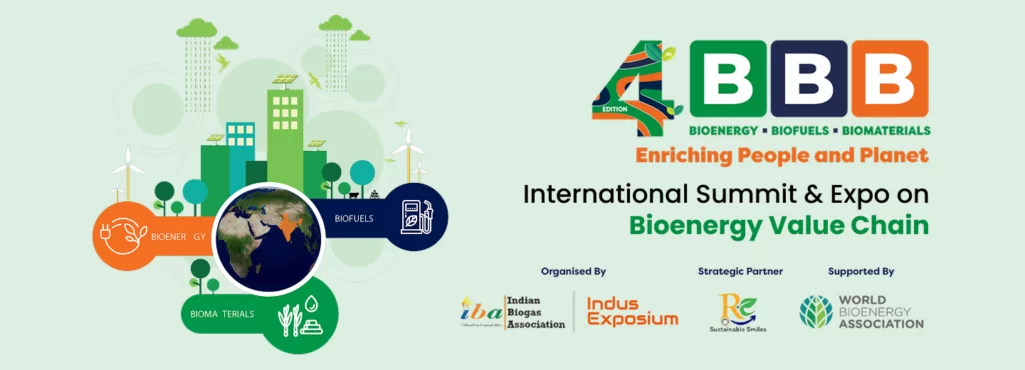
🌱 BBB Expo & Summit 2024 – Powering India’s Bioeconomy

The 4th edition of the BBB Expo & Summit 2024 is a premier platform uniting key stakeholders across the bioenergy, biofuel, and biomass ecosystem. The event serves as a dynamic convergence of innovators, manufacturers, technology providers, researchers, and policy-makers, committed to promoting sustainable energy solutions and transforming India’s biomass potential into a renewable powerhouse.

The summit is scheduled to take place on 08-09 May 2025 at Hotel Le Méridien, New Delhi, under the theme “Fostering Transition Towards a Viksit Bharat.”


🔑 Key Highlights:

  • 🌍 Multi-sectoral Exhibition: Featuring cutting-edge solutions in biofuels (biodiesel, ethanol, biogas), biomass gasification, briquetting & pelletizing technology, waste-to-energy systems, bioplastics, and renewable mobility.
  • 🔧 Technology Showcase: Discover the latest advancements in biomass utilization, cogeneration systems, EPC services, and plant machinery from industry leaders.
  • 🌾 Farmer & Industry Engagement: Bridging the gap between farmers, biomass producers, associations, and large-scale manufacturers to boost rural economy and resource optimization.
  • 📈 Investment & Collaboration Hub: A must-attend for startups, funding agencies, banks, and state renewable energy departments to explore partnership and growth opportunities.
  • 🏆 JEEV Awards: Recognizing excellence in the field of bioenergy, innovation, and environmental sustainability.
  • 🎤 Summit Sessions: Insightful panel discussions, expert talks, and presentations on the future of bioenergy, waste-to-energy innovations, and circular economy.
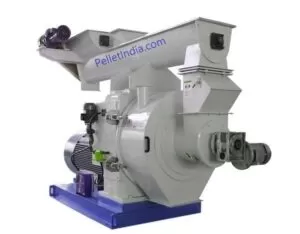
Ring die pellet mill 2

📣 Who Should Exhibit?

  • Biofuel Manufacturers
  • Biomass Pellet/Briquette Producers
  • EPC & Technology Solution Providers
  • Waste Management & Wastewater Companies
  • Boiler, Turbine, Compressor Manufacturers
  • State Energy Departments & Research Institutions
  • Startups, Farmers & Bio-Based Product Innovators
  • Financial Institutions and Investors in CleanTech

🎯 Event Objective:

  • Promote optimal biomass resource utilization across sectors.
  • Support establishment of briquette/pellet plants and bioenergy projects.
  • Foster biofuel applications in transportation and industrial sectors.
  • Encourage women empowerment and rural income generation through bio-based solutions.
  • Showcase R&D and commercialization of sustainable energy technologies.


Gram Plants (Chickpea Stalks) चने के पौधे (चने के डंठल) – A Profitable Waste-to-Energy Business Opportunity

🌱 1. Gram Plants (Chickpea Stalks) – The Untapped Seasonal Biomass Gold
(Already available in chaffed/grinded form on farms – ready to convert into high-quality biomass pellets!)

Chatgpt image apr 1 2025 12 33 44 pm

In many Indian farms, gram plants (chickpea stalks) are left unused after harvest. These residues are often already grinded/chaffed by threshers and not entirely consumed by cattle – making them ideal for biomass fuel conversion.
Turning this agricultural waste into profitable pellets not only boosts rural economies but also helps combat pollution from stubble burning. ♻️🔥

👉 PelletIndia.com can provide better solutions for pelletizing gram plant biomass and maximizing profitability.


🔍 Technical Analysis of Chickpea Stalks

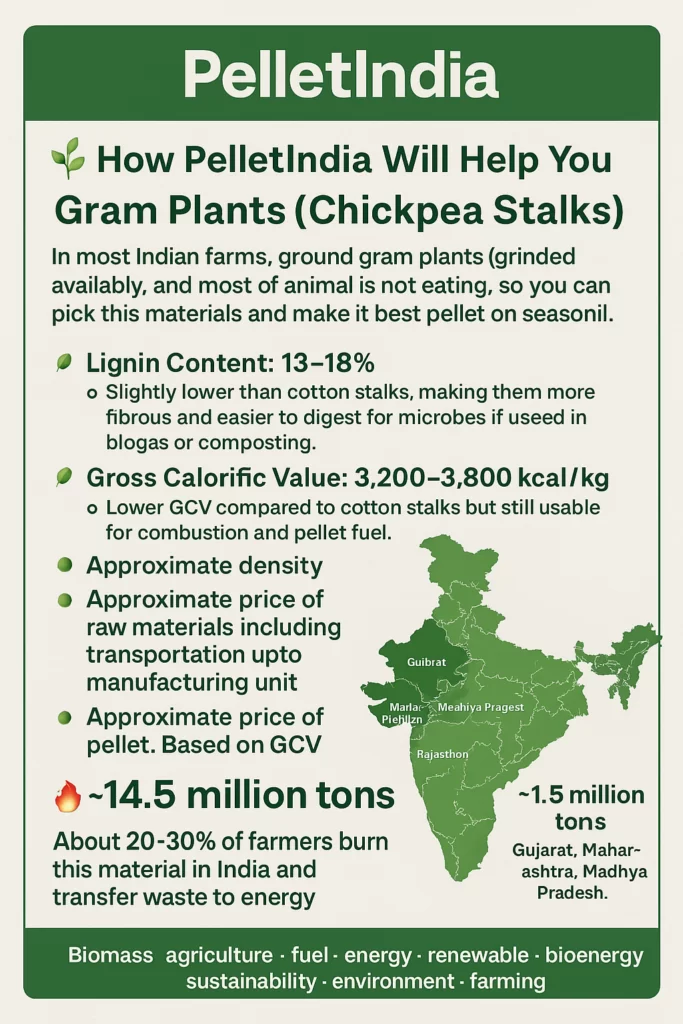
  • 🌿 Lignin Content: 13–18%
    ➤ Ideal for combustion and biogas due to moderate lignification.
  • 🔥 Gross Calorific Value (GCV): 3,200–3,800 kcal/kg
    ➤ Suitable for heating, industrial use, and pellet stoves.
  • 📦 Bulk Density:
    • Raw: 90–130 kg/m³
    • Pelletized: 550–650 kg/m³
  • 💸 Raw Material Price (incl. transport): ₹1.5–2.5/kg
  • 💰 Pellet Selling Price: ₹8–11/kg
    ➤ Profitable margins based on GCV and ash content.

📊 Estimated Chickpea By-product Availability (Annual)

StateChickpea Residue (Lakh Tons)
Gujarat7–8 Lakh Tons
Maharashtra6–7 Lakh Tons
Madhya Pradesh10–12 Lakh Tons
Rajasthan5–6 Lakh Tons
Total (4 states)28–33 Lakh Tons annually

🔥 Burning vs. Conversion – The Reality

  • 50–60% of these residues are burnt on fields due to lack of use.
  • Converting just 25% of this waste to pellets can generate 7–8 lakh tons of bio-pellets, replacing coal and LPG.
  • 🌍 Waste-to-Energy = Cleaner Air + Profitable Rural Economy

👉 PelletIndia.com can help set up customized pellet production units for utilizing this biomass efficiently.


💹 Why It’s a Profitable Business?

Minimal preprocessing needed (already chaffed).
Available in bulk during Rabi season (Feb–April).
Local collection & pellet manufacturing can create rural jobs.
Growing government & industry demand for clean biomass fuel.
Export potential to Europe and Asia. 👉 PelletIndia.com offers expert guidance on plant setup, equipment selection, and cost optimization.